 |
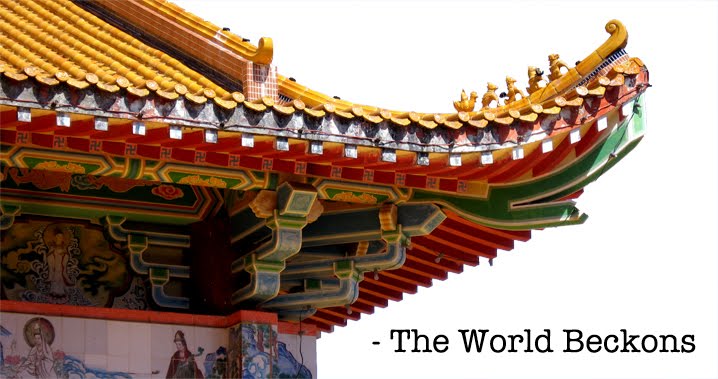
| Fiery fingers extend with a wave, in a wave. |
Sunday, November 16, 2025


Friday, November 14, 2025
Back to School.

King’s Wharf, Bermuda – The coral is over-punctuated with iridescent commas, shimmering in blues and yellows.
I'm absorbed in a swirl of calligraphy.
While the water can't be described as warm this time of year, I couldn't pass up the opportunity to take a catamaran to Harman's Bay and to immerse myself in some of Bermuda's sea life.
Snorkelling along the surface, I'm swarmed by schools of fish that appear to collectively bounce like a ball. Others are clear enough to be nearly imperceptible.
Their greetings float up in bubbles as they glide past in an effortless rhythm I can only ever hope to discover.
Nearby, an octopus scurries under a rock set beneath the delicate swish of a crop of fan coral. I float languidly along the coastline, feeling the sea move through me.
In the upper half of my goggles appear yellow-crowned night herons and Great Keskidees, which sound as beautiful as they look, their yellow bellies ruffled by the breeze.
It may not be warm, but the island is a lot quieter.
And the water is always my happy place.
Thursday, November 6, 2025
Hide and Souk.
Casablanca, Morocco – Stepping off the bus, we’re immediately surrounded by touts.
A DIY reflecting pool.
And shouts.
“Taxi? Taxi! Taxi!!!”
It's humid. Motorcycles bray like New Year’s noisemakers as they rip through crosswalks. Angry horns echo.
Pretending to know where I'm headed, I press firmly through the crowd – now five deep – and across the street. Only one man follows before realizing I was serious when I said "no, thank you."
I may not really know where I'm going, but I have a decent guess.
The Hassan II Mosque is pretty hard to miss.
Its ornately detailed minaret rises from the ocean, drawing the day’s haze onto the sky. At 210 metres, it’s the second tallest in the world.
Hewn from marble and granite, the mosque is covered in intricate mosaics and features a retractable roof. It can accommodate more than 100,000 worshippers at a time, including 25,000 inside.
 |
| Funky cold medina. |
A young man on a stool uses a wooden block to tap a knife as he breaks down a large fish. Beside him, another cleans squid. Farther along, women gossip at a small storefront filled with spices. I'm surprised people largely leave us alone, offering only a soft "bonjour" and a smile.
We alternate our replies in Arabic and French.
Apart from taking in the bustle and untangling the threads of jagged streets, the rest of the old souk is a disappointment: it's filled with counterfeits and cheap trinkets. Nobody even glances up from their phones to try to sell us anything.
Just like home.
I'm privileged to be back on my favourite continent for a fifth time, which has brought a very different experience – but one that's still reminiscent.
And one that makes me feel alive in a way few other things do.
Wednesday, November 5, 2025
Rock On.
 |
| "What can we steal?" |
Gibraltar, UK – Like a rigid lightning bolt, the Charles V Wall zigzags precipitously downward.
Its 660 narrow and steep stone steps are patrolled by Barbary macaques, which scamper up the wall and rest unhelpfully at our feet. While they're no doubt accustomed to humans, I still don't find it wise to step over a mother nuzzling her baby.
With so little room to turn around, I'm at least afforded time to catch my breath.
All morning, the Rock of Gibraltar has been shrouded in cloud, shrugging in darkness. Having begun our trek at 7 a.m., we arrived at the Devil’s Gap Battery an hour too early to enter the nature reserve. Naturally, the attendant was late.
And had forgotten his keys.
 |
| A Christian rock show. |
They're thoroughly delighted. As are we.
We stop at St. Michael’s Cave, where a light show illuminates stalactites and tells some of the history of how it was formed. Ancient Greeks believed it was the entrance to Hades.
Now a concert venue and tourist attraction, we dodge slow drips. A swirl of purple and pink illuminates a formation that takes the shape of an angel.
Stepping outside, the heavens open more fully.
What a fantastic day.
Tuesday, November 4, 2025
Unmoored.
 |
| Missed a spot. |
The Alhambra’s tall, labyrinthine gardens gently whisper love letters in jasmine, rose, cypress and orange.
Bright red pomegranates – granada in Spanish – hang like festive balls on a Christmas tree. It’s one of the best-smelling places I’ve visited in a long time.
Inside, it’s also one of the most breathtaking.
Built primarily by the Nasrid Dynasty between 1238 and 1358, the palace and fortress complex is among the best-preserved monuments of the Medieval Islamic world.
Modest exteriors belie the explosion of geometric tile, marble and intricately carved stucco inside. Swirls of calligraphy have been etched repetitively into the walls as though a student had to repeat a lesson learned on a chalkboard.
 |
| Courting lions. |
In Islamic architectural tradition, rooms open through arched doorways into central courtyards lined with sharply manicured box hedges and reflecting pools. The serene, liquid canvas of the Court of Myrtles would eventually inspire the Taj Mahal.
Having fallen to Christian conquest, the Alhambra became a Spanish royal court in 1492. As a result, the city is a fascinating blend of Moorish, Gothic and Spanish Renaissance architecture that speaks to 800 years of Andalusian history, religion, community and culture.
Walking into the Hall of Ambassadors, we feel a faint connection.
Here, behind the flicker of a thousand pinpricks poked into the shutters, Columbus received royal endorsement for his journey to the Americas.
It's like the stars aligned.
Monday, November 3, 2025
A Stone's Throw From the Past.
 |
| Up at the crack of dawn. |
Cartegena, Spain – Cartegena's Calle Mayor is tiled in blue marble.
I can only imagine how slippery it becomes in the rain.
The naval port’s main street carries you through a history sculpted from millennia. Today, stunning Art Nouveau structures appear to have been pulled from the ground as ornate blinds for the sun.
They flaunt wealth from several mining booms, where silver and lead literally and figuratively shaped the city.
Painted iron railings curl across the fronts of well-appointed apartments – embroidery stitches tying times together. Pots of flowers punctuate the pale yellow and pink buildings with colourful rosettes.
Tucked behind them sits a Roman theatre built in the dying years of BC. It’s still being unearthed.
Farther down the street, hollow facades are held up by steel frames. Their former insides are being turned upside down in an attempt to expose even more of crooked lines that have drawn the city’s history.
The sun breathes late-season warmth onto our necks as we reach the top of the hill in Parque Arqueológico Molinete, where ruins as far back as the city’s founding in 227 BC are strewn like discarded chicken bones.
A sign tells us this was a rough red light district by the 18th century and somewhere you wouldn’t have wanted to be. Now, feral cats scamper over crumbled walls and past small, painted houses the municipality has built for them.
More than 2,000 years later, the hill is still home.
Saturday, November 1, 2025
Time Tapas.
Barcelona, Spain – A perpetual motion machine twists behind the thin, marble bar at La Plata.
Something's fishy.
He smiles, spinning the spigot of a barrel set atop the fridge.
Without so much as a splash, house-made red wine falls in a graceful arc into thimble-sized glasses. It's a perfect dive.
As he has for 50 years, Pepe Gómez moves effortlessly, serving small plates of fried anchovies. Washing glasses. More anchovies. Wiping down the counter. A plate of sausage. Tossing out smiles and jokes with regulars.
And mentally tabulating bills of the growing crowd, which spills out onto the darkened street.
Based on faded photos on the wall, it seems little has changed since the small, corner establishment opened in 1945. It feels like you could be stepping into any one of them.
Still six tables. Still four tapas on the menu. And still a crowd celebrating the end of the day.
Set amidst the wallpaper of tourist shops hawking cheap trinkets in the Gothic Quarter, a moment of authenticity.
Feeling Familar.
Barcelona, Spain – The towering sandstone forest of La Sagrada Familia is bathed in a warm glow of ambient colour.
Searching for a pot of God.
Flames flicker on the floor. Sunrise stretches over branched ceilings.
It's as though all seasons are present at once and you can't help but look up – to gawk, even. When I last stood on this spot 30 years ago, it was the site of a gift shop and of continuous construction.
Now, it's a place of prayer in the world's tallest church.
And, next year, after 144 years, the chisels are rumoured to finally stop – construction of the basilica will be complete.
Walking around the south side, though, I have my suspicions.
Having received one of the earliest entrance times, I step outside and have the entire front of the building to myself.
I'm lost in the enormity of the moment.
Intricate carvings appear to crawl from the stone. Seasonal fruits in reds and oranges adorn the spires, dotting the sky with colour. A green cypress tree, reminiscent of Christmas, is decked with 21 doves. Delicate bronze trumpets, muted and turned green, are pressed to stone lips.
I may not be the slightest bit religious, but I'm still awed.
And humbled by Gaudi's vision.
Subscribe to:
Comments (Atom)